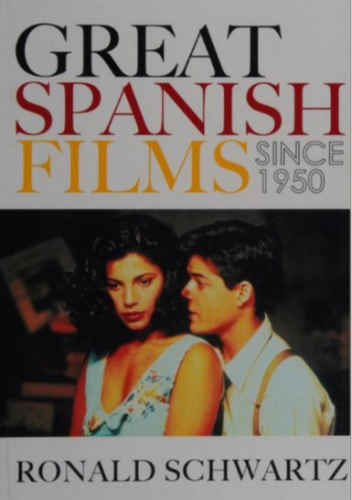
The Great Spanish Films: 1950 - 1990
Ronald Schwartz
The Great Spanish Films: 1950 - 1990
Ronald Schwartz
Since its beginnings, modem Spanish cinema was under strict censorship by the church and the state, during and after the Spanish civil war (1936-1939),because it had to conform to the ideological demands of the Nationalist regime. In 1950 the New Spanish Cinema was born as a protest over General Francisco Franco's policies. The imitative Hollywood "white telephone" school of Spanish cinema was over. A new series of directors and films began to move away from the conformist line and to offer a bold new look at Spain through its own brand of Spanish realism. In the early 1950s, Juan Antonio Bardem, Luis Garcia Berlanga, Luis Bunuel, and Jose Antonio Nieves Conde appeared, expressing a liberal image of Spain to the world in such films as Muerte de un ciclista (Death of a Cyclist),Bienmido Senor Marshall (Welcome Mr. Marshall),Viridiana, and Surcos (Furrows). The emergence of a new Spanish cinema and new directors continued into the sixties and seventies with Carlos Saura and Los golfos (The Hooligans),Basilio Martin Patino and Nueve cartas a Berta (Nine Let-ters to Berta),and Miguel Picazo and La tia ',lila (Aunt Tula). Other directors of the seventies, such as Jose Luis Borau with Furtivos (Poachers),Jaime Chavarri and El desencanto (The Disenchanted Ones),Victor Erice and El espiritu de la colmena (The Spirit of the Beehive),Manuel Gutierrez Aragon and Camada negra (Black Brood),and Pedro Olea and Torment° (Torment),also contributed to the new movement. When Franco died in 1975, censorship was abolished, and with this development was born the new and exciting Spanish cinema of the mid-seventies and early eighties. Formerly taboo subjects—sexuality, the church, the army, the civil war, drugs, AIDS—were openly explored. The Spanish cinema was no longer escapist and entertaining but, at long last, realistically mirrored the society it depicted in its films. New directors such as Vincente Aranda in Cambio de .sexo (Sex Change),Jaime Camino in Las taigas vacaciones del '36 (The Long Vacation of 1936),Ricardo Franco in Pascual Duarte, and Jose Luis Garci in Asignatura pendiente (Unfinished Assignment) emerged during the "boom" of the late seventies.
Szczegóły
Rok wydania
2008
Liczba stron
464 str.
Wydawnictwo
Scarecrow Press
Język
angielski
Format
papier
Gatunek
film, kino, telewizja
ISBN
9780810854055
Dodaj „The Great Spanish Films: 1950 - 1990" do swojej półki
Załóż darmowe konto i miej swoje lektury, oceny oraz postępy w jednym miejscu. Dołącz do 200+ czytelników, którzy już wiedzą, co przeczytali i co chcą przeczytać.


Trzy półki czytelnicze
Przeczytane, Teraz czytam i Chcę przeczytać — uporządkuj swoje lektury w sekundy.
Oceny i recenzje
Skala 1–10, prywatne notatki, ulubione cytaty. Wracaj do swoich opinii kiedy chcesz.
Statystyki i wyzwania
Ustal roczny cel czytelniczy i obserwuj jak rośnie liczba przeczytanych stron.
Rekomendacje i grafiki
Odkrywaj kolejne tytuły i generuj estetyczne podsumowania roku w książkach.
Rejestracja zajmuje mniej niż 30 sekund. Bez karty, bez zobowiązań.
Opinie czytelników
Oceń tę książkę
Oceniona książka automatycznie trafi na Twoją półkę Przeczytane.
Twoja ocena
Chcesz podzielić się ze światem tym, co czytasz?
Wygeneruj estetyczną grafikę z tej książki w kilka kliknięć, idealną jako post albo stories. Pełna kontrola nad motywem, tytułem i krótką notką. Gotowe do wrzucenia na Instagrama.