
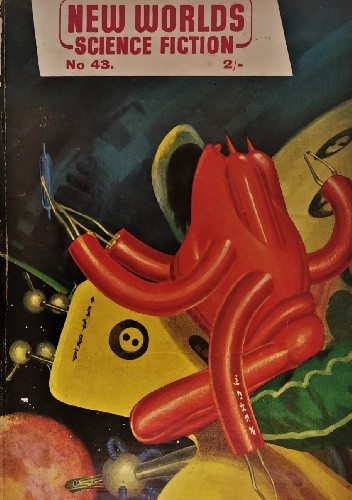
New Worlds Science Fiction, #43 (01/1956)
John Carnell, John Brunner, E. C. Tubb, James White, Leslie Flood, Alan Barclay, John Newman
New Worlds Science Fiction, #43 (01/1956)
John Carnell, John Brunner, E. C. Tubb, James White, Leslie Flood, Alan Barclay, John Newman
New Worlds was a British science fiction magazine that began in 1936 as a fanzine called Novae Terrae. John Carnell, who became Novae Terrae's editor in 1939, renamed it New Worlds that year. He was instrumental in turning it into a professional publication in 1946 and was the first editor of the new incarnation. It became the leading UK science fiction magazine; the period to 1960 has been described by science fiction historian Mike Ashley as the magazine's "Golden Age". John Carnell negotiated a publishing agreement for the magazine with Pendulum Publications, but only three issues of New Worlds were subsequently produced before Pendulum's bankruptcy in late 1947. A group of science fiction fans formed a company called Nova Publications to revive the magazine; the first issue under their management appeared in mid-1949. New Worlds continued to appear on a regular basis until issue 20, published in early 1953, following which a change of printers led to a hiatus in publication. In early 1954, when Maclaren & Sons acquired control of Nova Publications, the magazine returned to a stable monthly schedule. New Worlds was acquired by Roberts & Vinter in 1964, when Michael Moorcock became editor. By the end of 1966 financial problems with their distributor led Roberts & Vinter to abandon New Worlds, but with the aid of an Arts Council grant obtained by Brian Aldiss, Moorcock was able to publish the magazine independently. He featured a good deal of experimental and avant-garde material, and New Worlds became the focus of the "New Wave" of science fiction. Reaction among the science fiction community was mixed, with partisans and opponents of the New Wave debating the merits of New Worlds in the columns of fanzines such as Zenith-Speculation. Several of the regular contributors during this period, including Brian Aldiss, J. G. Ballard, Thomas M. Disch and Moorcock himself became major names in the field. By 1970 Moorcock was too deeply in debt to be able to continue with the magazine, and it became a paperback quarterly after issue 201. The title has been revived multiple times, with Moorcock's direct involvement or approval; by 2012, 21 additional issues had appeared in various formats, including several anthologies. CONTENTS: • New Worlds Profiles: John K. H. Brunner • [New Worlds Profiles] • essay by uncredited • 1955 I.F.A. Presentation • (1956) • essay by John Carnell • Host Age • (1956) • novelette by John Brunner • The Hot Potato • novelette by Alan Barclay • The Mighty Midgets • (1956) • essay by John Newman • The Pensioners • (1956) • short story by E. C. Tubb [as by Alan Guthrie] • Magic Touch • (1956) • short story by Duncan Lamont • Red Alert • (1956) • novelette by James White • Review: The Demigods by Alfred Gordon Bennett • review by Leslie Flood • Review: The Man With Only One Head by Densil Neve Barr • review by Leslie Flood • Review: Martin Magnus on Venus by William F. Temple • review by Leslie Flood • Review: Beyond the Barriers of Space and Time by Judith Merril • review by Leslie Flood • Review: The Dreaming Jewels by Theodore Sturgeon • review by Leslie Flood • Review: Jack of Eagles by James Blish • review by Leslie Flood • Review: Shadows in the Sun by Chad Oliver • review by Leslie Flood • Review: Untouched by Human Hands by Robert Sheckley • review by Leslie Flood • Review: Looking Forward by Milton Lesser • review by Leslie Flood
Szczegóły
Rok wydania
1956
Liczba stron
128 str.
Wydawnictwo
Nova Publications Ltd.
Język
angielski
Format
papier
Cykl
New Worlds Magazine
Gatunek
czasopisma
Inne książki tych autorów
Opinie czytelników
Oceń tę książkę
Oceniona książka trafi na półkę Przeczytane.
Dodaj „New Worlds Science Fiction, #43 (01/1956)" do swojej półki
Załóż darmowe konto i miej swoje lektury, oceny oraz postępy w jednym miejscu. Dołącz do grona zadowolonych czytelników, którzy już wiedzą, co przeczytali i co chcą przeczytać.

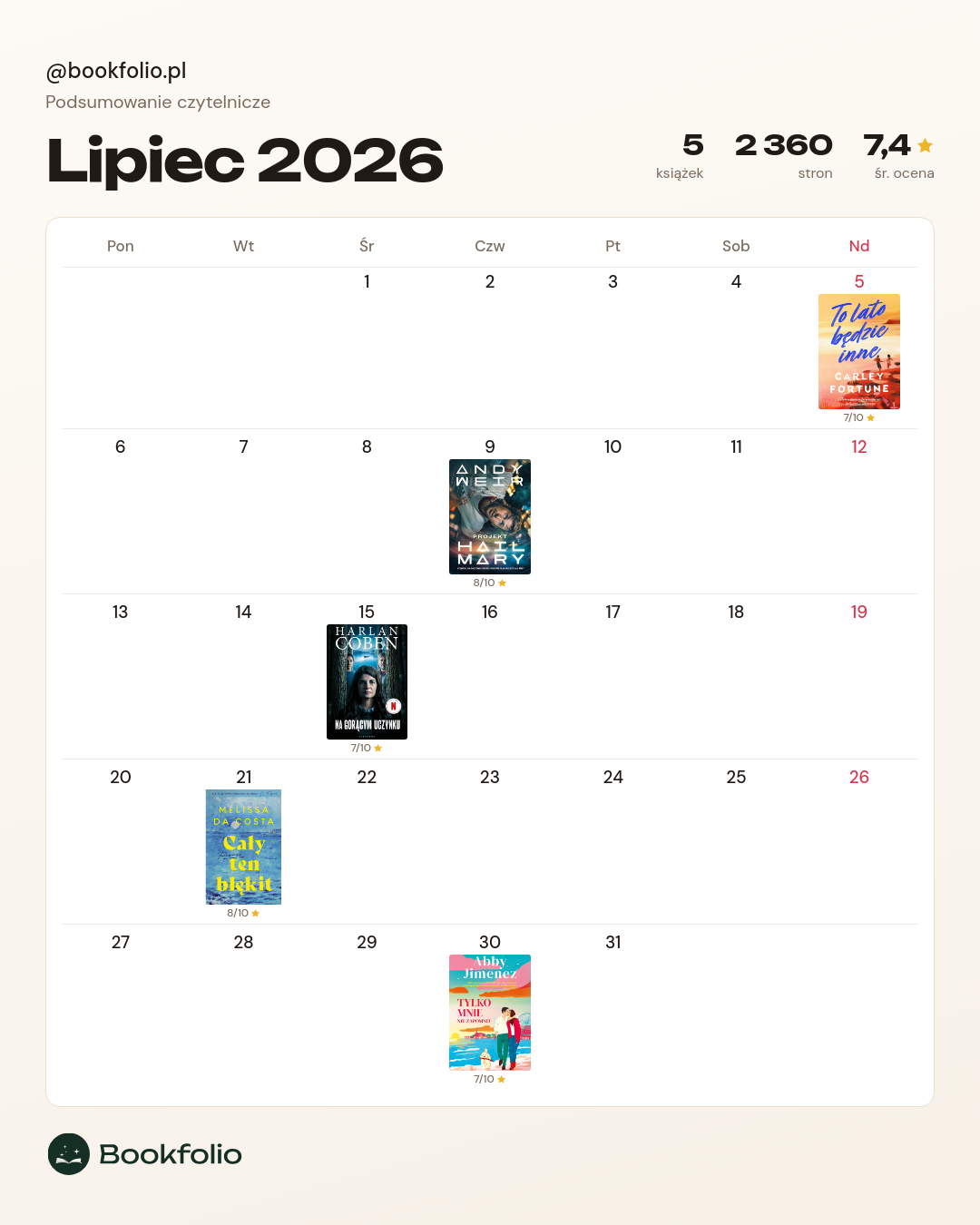

Trzy półki czytelnicze
Przeczytane, Teraz czytam i Chcę przeczytać. Uporządkuj swoje książki w sekundy.
Oceny i recenzje
Skala 1-10, prywatne notatki, ulubione cytaty. Wracaj do swoich opinii kiedy chcesz.
Statystyki i wyzwania
Ustal roczny cel czytelniczy i obserwuj jak rośnie liczba przeczytanych stron.
Rekomendacje i grafiki
Odkrywaj kolejne tytuły i generuj estetyczne podsumowania roku w książkach.