
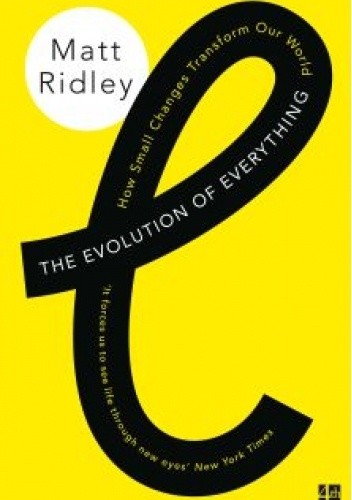
Building on his national bestseller The Rational Optimist, Matt Ridley chronicles the history of innovation, and how we need to change our thinking on the subject. Innovation is the main event of the modern age, the reason we experience both dramatic improvements in our living standards and unsettling changes in our society. Forget short-term symptoms like Donald Trump and Brexit, it is innovation itself that explains them and that will itself shape the 21st century for good and ill. Yet innovation remains a mysterious process, poorly understood by policy makers and businessmen, hard to summon into existence to order, yet inevitable and inexorable when it does happen. Matt Ridley argues in this book that we need to change the way we think about innovation, to see it as an incremental, bottom-up, fortuitous process that happens to society as a direct result of the human habit of exchange, rather than an orderly, top-down process developing according to a plan. Innovation is crucially different from invention, because it is the turning of inventions into things of practical and affordable use to people. It speeds up in some sectors and slows down in others. It is always a collective, collaborative phenomenon, not a matter of lonely genius. It is gradual, serendipitous, recombinant, inexorable, contagious, experimental and unpredictable. It happens mainly in just a few parts of the world at any one time. It still cannot be modelled properly by economists, but it can easily be discouraged by politicians. Far from there being too much innovation, we may be on the brink of an innovation famine. Ridley derives these and other lessons, not with abstract argument, but from telling the lively stories of scores of innovations, how they started and why they succeeded or in some cases failed. He goes back millions of years and leaps forward into the near future. Some of the innovation stories he tells are about steam engines, jet engines, search engines, airships, coffee, potatoes, vaping, vaccines, cuisine, antibiotics, mosquito nets, turbines, propellers, fertiliser, zero, computers, dogs, farming, fire, genetic engineering, gene editing, container shipping, railways, cars, safety rules, wheeled suitcases, mobile phones, corrugated iron, powered flight, chlorinated water, toilets, vacuum cleaners, shale gas, the telegraph, radio, social media, block chain, the sharing economy, artificial intelligence, fake bomb detectors, phantom games consoles, fraudulent blood tests, faddish diets, hyperloop tubes, herbicides, copyright and even—a biological innovation—life itself.
Szczegóły
- Data wydania
- 19 maja 2020
- Liczba stron
- 416 str.
- Wydawnictwo
- HarperCollins
- Język
- angielski
- Format
- papier
- Gatunek
- popularnonaukowa
- ISBN
- 9780062916594
Najczęstsze pytania o książkę
- Ile stron ma „How Innovation Works: And Why It Flourishes in Freedom”?
- „How Innovation Works: And Why It Flourishes in Freedom” ma 416 stron (wydanie: HarperCollins, 2020). Inne wydania mogą się różnić liczbą stron.
- Ile czasu zajmuje przeczytanie książki „How Innovation Works: And Why It Flourishes in Freedom”?
- Przy średnim tempie 35 stron na godzinę lektura zajmie około 12 godz.. Czytając 30 minut dziennie, skończysz w 24 dni.
- Kto napisał książkę „How Innovation Works: And Why It Flourishes in Freedom”?
- „How Innovation Works: And Why It Flourishes in Freedom” to książka autorstwa Matt Ridley.
Inne książki autora
(8)



Opinie czytelników
Oceń tę książkę
Kiedy przeczytana?
Oceniona książka trafi na półkę Przeczytane.
Dodaj „How Innovation Works: And Why It Flourishes in Freedom" do swojej półki
Załóż darmowe konto i miej swoje lektury, oceny oraz postępy w jednym miejscu. Dołącz do grona zadowolonych czytelników, którzy już wiedzą, co przeczytali i co chcą przeczytać.
Trzy półki czytelnicze
Przeczytane, Teraz czytam i Chcę przeczytać. Uporządkuj swoje książki w sekundy.
Oceny i recenzje
Skala 1-10, prywatne notatki, ulubione cytaty. Wracaj do swoich opinii kiedy chcesz.
Statystyki i wyzwania
Ustal roczny cel czytelniczy i obserwuj jak rośnie liczba przeczytanych stron.
Rekomendacje i grafiki
Odkrywaj kolejne tytuły i generuj estetyczne podsumowania roku w książkach.